Catalytic Converter Scrap Prices Update — October
If you buy, sell or collect scrap catalytic converters, you'll know that prices don't stand still. Values follow the precious metals market, so what a converter was worth last month may not be what it's worth today. This October update explains what drives catalytic converter prices, what to watch this month and how to check a current price quickly.
MetCat provides real-time pricing through the MetCat app, updated daily in line with the precious metals market, so you don't have to rely on outdated lists.
Key Takeaways
- Catalytic converter prices are linked to the markets for platinum, palladium and rhodium, so they change.
- The type of converter, identified by its code, has a big effect on its value.
- The MetCat app shows current prices, updated daily.
- Treat any published price as a snapshot rather than a promise. Check the app for the latest figure.
What Drives Catalytic Converter Prices?
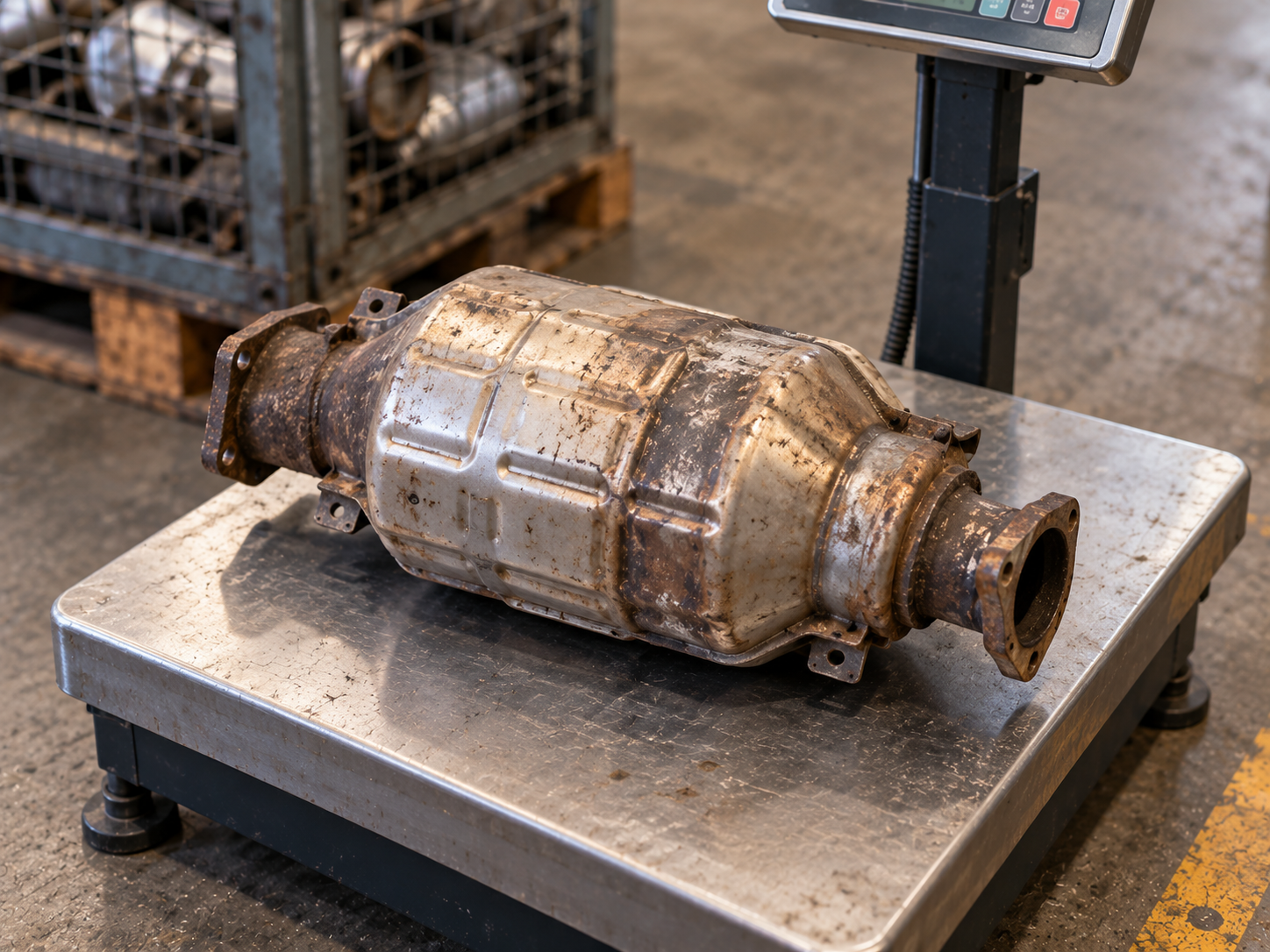
Catalytic converters contain precious metals, and the value of a converter depends largely on what it contains and what those metals are worth. The main factors are:
- Platinum, palladium and rhodium prices. These markets move daily.
- Converter type. Different converters carry different amounts and combinations of metals, which is why identification by code matters.
- Material condition. Complete converters are assessed differently from damaged or partial units.
- Processing route. Whether material is sold outright or toll refined can affect how value is reached.
- Volume and logistics. Larger quantities and collection arrangements can shape commercial terms.
If you're unsure which converter you have, our guide to identifying your catalytic converter walks you through it.
October Market Snapshot
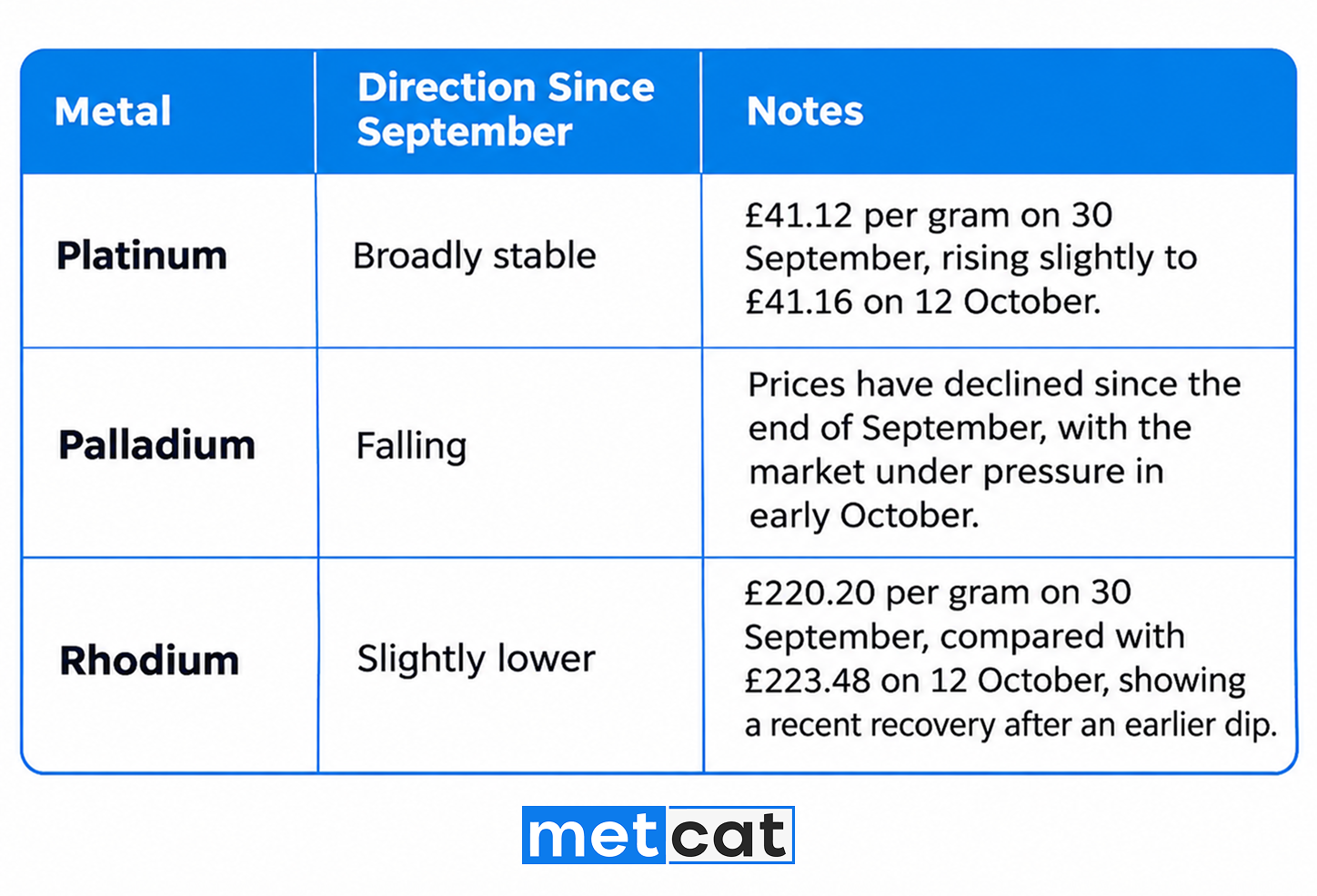
What this means for converter values: when these metals rise, converter prices tend to follow, and when they fall, values can ease. The effect isn't identical across every converter type, because each one holds a different mix of metals. These changes can affect catalytic converter values, but the impact varies depending on the type of converter and the mix of precious metals it contains.
How To Check the Current Price
1. Identify your converter. Find its code or markings.
2. Open the MetCat App and search for your catalytic converter to check its current price. Search for the converter to see the current price.
3. Check regularly. App prices are updated daily, so a quick look before you sell is worthwhile.
4. Get a quote. For larger quantities, or if you'd like to talk it through, request a free, quick quote.
Planning Around Price Movement
Price changes don't have to catch you out. A few practical habits help:
- Keep records of the converters you hold, including codes and quantities.
- Check prices before collection or drop-off, not just when you first acquire stock.
- Consider your route. Selling outright gives a clear price at the time. Toll refining reflects the measured content. Our guide on toll refining vs selling outright can help you decide.
- Sell through a compliant buyer. MetCat operates under the Scrap Metal Dealers Act 2013, including seller identity and record-keeping requirements.
Why Sell to MetCat?
We bring more than 45 years of experience in metal recycling, in-house processing equipment and relationships with leading autocatalyst refineries. That supports competitive pricing, fast payment and a service that's open to both Trade and Public. You can drop your material at our Wolverhampton site or arrange a collection. Learn more about metal purchasing or contact us.
Common Mistakes When Checking Converter Prices
- Relying on an old price list. Values change with the market, so older figures can be out of date.
- Assuming similar-looking converters are worth the same. Two units can look alike and carry different value. Check the code.
- Skipping records. Keep a note of what you have, so you can compare prices over time.
- Ignoring logistics. Collection and drop-off arrangements can affect the overall outcome, so factor them in.
- Selling through a non-compliant route. Always deal with a buyer that follows the Scrap Metal Dealers Act 2013.
Frequently Asked Questions
Why do catalytic converter prices change?
Converter values follow the markets for the precious metals inside them, mainly platinum, palladium and rhodium. As those metal prices move, the value of each converter can rise or fall.
How often are MetCat prices updated?
Prices in the MetCat app are updated daily in line with the precious metals market. You can also get pricing by phone.
Does every converter have the same value?
No. Each converter type contains a different amount and combination of metals, so values vary widely. Identifying the converter by its code is the first step to finding its current price.
Can I lock in today's price?
Prices are market-linked and can change, so values aren't fixed in advance. For larger quantities, contact MetCat to discuss options and request a quote.
How do I find out what my converter is worth?
Identify it by its code, check the MetCat app for the current price or request a free, quick quote from the team.
Final Thoughts On Catalytic Converter Prices
Catalytic converter prices move with the markets, so a regular check is the simplest way to stay informed. Know your converters, watch the metals and use current pricing rather than old lists. To see today's figures, visit MetCat and download the app.