
DPF & ceramic processing, tested accurately in-house
We use the latest technology to analyse DPF and ceramic materials accurately. DPF is a service we've offered for years — and we're one of the few able to test in-house, with the knowledge and equipment to do it properly, without limiting the volume of material you bring in.

Three steps to sell your DPF & ceramic material
Send It In
Send in your ceramic & DPF material.
Weighed, Milled & Tested
It's weighed, milled and tested in-house to give the most accurate results.
Get Paid
Smooth, reliable settlement. Fair pricing, efficient process, no unnecessary delays.
We process a wide range of precious metal-bearing ceramic materials, including:
Diesel particulate filters (DPFs)
Ceramic catalytic converter monoliths
Cordierite substrates
Silicon carbide DPFs
Catalytic converter ceramic powder
Mixed ceramic batches
Industrial catalyst ceramics
Precious metal-bearing ceramic waste

Precious metals such as platinum, palladium and rhodium are distributed throughout the ceramic substrate. Accurate analysis allows:
Fair valuation
Improved transparency
Better inventory control
Consistent purchasing decisions
Confidence for buyers and sellers
Professional sampling and analysis reduce uncertainty and help maximise the value recovered from every batch.
Inside our processing procedure
Material Reception
Every batch is received, recorded and allocated a unique reference.
Inspection
Materials are inspected to identify contamination, damage and substrate type.
Crushing & Preparation
The ceramic material is prepared for milling.
Ball Milling
The material is processed using industrial ball mills to produce a fine, homogeneous powder — ensuring representative sampling throughout the batch.
Laboratory Sampling
Representative samples are collected using established sampling procedures.
XRF Analysis
Samples are analysed using X-ray fluorescence (XRF) to determine elemental composition.
Valuation
Analytical results are used alongside current precious metal market values to determine the value of the material.
Our processing facility includes:
Industrial ball mills
High-precision XRF analysers
Sample preparation equipment
Laboratory scales
Dust-controlled processing systems
Batch homogenisation equipment
Secure material handling procedures
Our investment in specialist equipment allows us to process ceramic materials efficiently while maintaining high analytical standards.
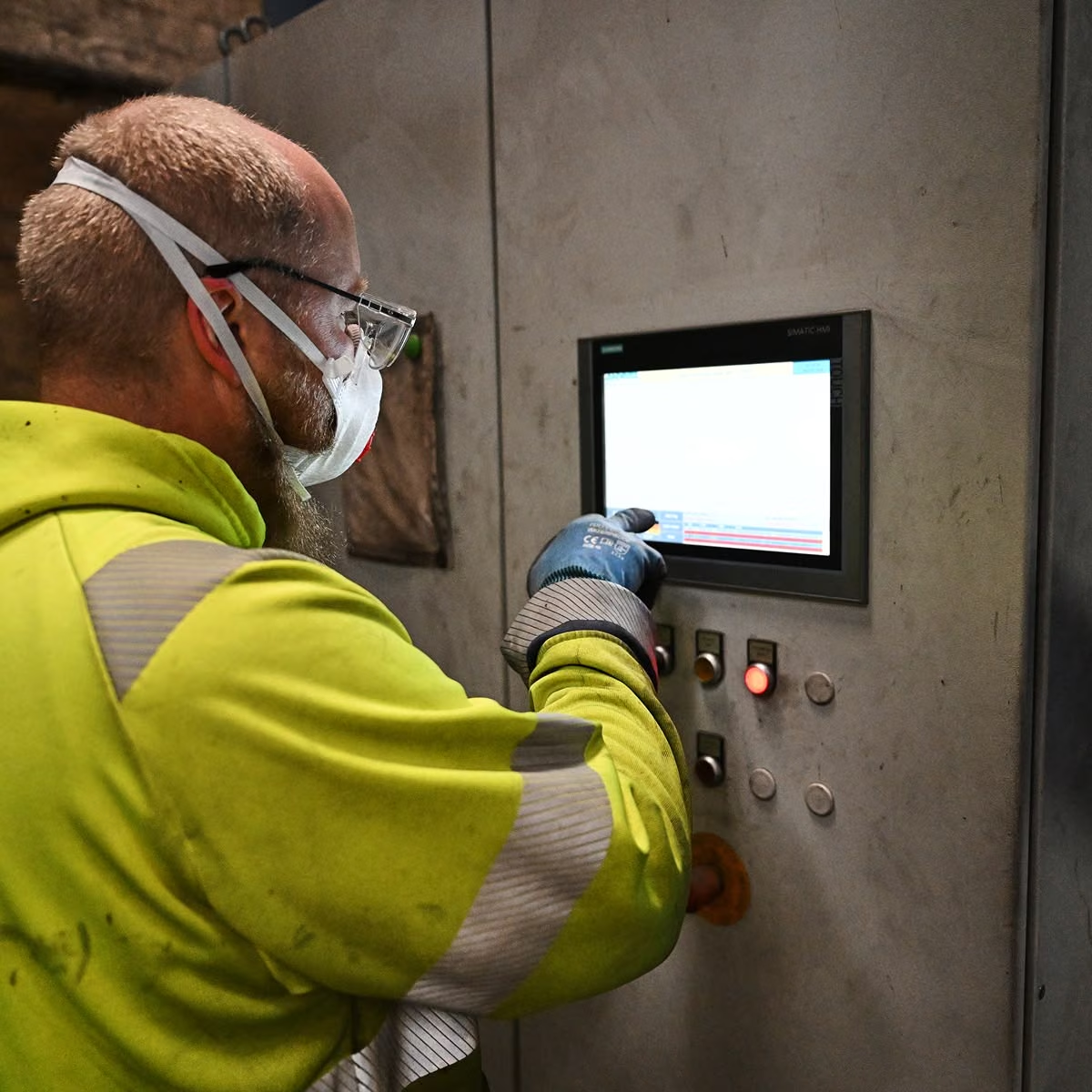
Not your average metal buyer
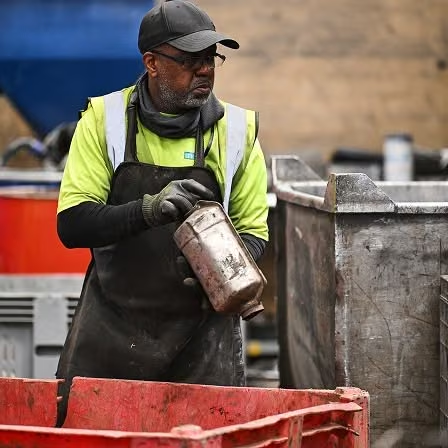
Specialist Knowledge
We understand catalytic converters, diesel particulate filters and precious metal-bearing ceramics.

Advanced Equipment
Our investment in professional analytical equipment enables consistent and repeatable results.

Accurate Sampling
Representative sampling is essential when valuing ceramic materials, and our processing methods are designed to maximise accuracy.

Transparent Process
We believe our customers should understand exactly how their material is processed and analysed.

Our customers include:
Catalytic converter recyclers
Scrap metal merchants
Vehicle dismantlers
ELV operators
Refiners
Precious metal traders
Automotive recyclers
Waste management companies
Industrial recycling businesses
Ready to process your DPF or ceramic material?
Get in touch and we'll arrange collection or delivery. Your material is weighed, milled and tested in-house, then valued on verified results — not estimates. Looking for live catalytic converter prices? Download the MetCat App.
Common questions about selling and processing catalytic converters
Ceramic processing is the preparation of catalytic converter or DPF ceramic material into a homogeneous powder suitable for representative sampling and laboratory analysis.
Ball milling produces a consistent, fine powder, helping ensure that laboratory samples accurately represent the entire batch.
X-ray fluorescence (XRF) is a non-destructive technique used to determine the elemental composition of a material — rapid, repeatable, and supporting accurate valuation.
Yes. We're equipped to process a range of ceramic substrate types, including cordierite and silicon carbide.
Yes. We regularly handle both small consignments and larger commercial volumes.
Yes. We work with businesses throughout the UK.