Toll Refining vs Selling Outright: Which Gets Trade Suppliers the Best Return?
If you handle catalytic converters as a trade supplier, there's a decision that shapes your margins: do you sell material outright at an agreed price, or send it through toll refining and be paid based on what's recovered? Each route has a place, and neither is automatically better.
This guide explains how toll refining catalytic converters works, how it compares with selling outright, and what to weigh up before choosing. As a catalytic converter recycler with more than 45 years of experience in metal recycling, MetCat offers both routes.
Key Takeaways
- Selling outright means agreeing a price for converters up front, often per piece or by identifying code.
- Toll refining means your material is processed, the precious metal content is assayed, and you're paid according to the metals recovered.
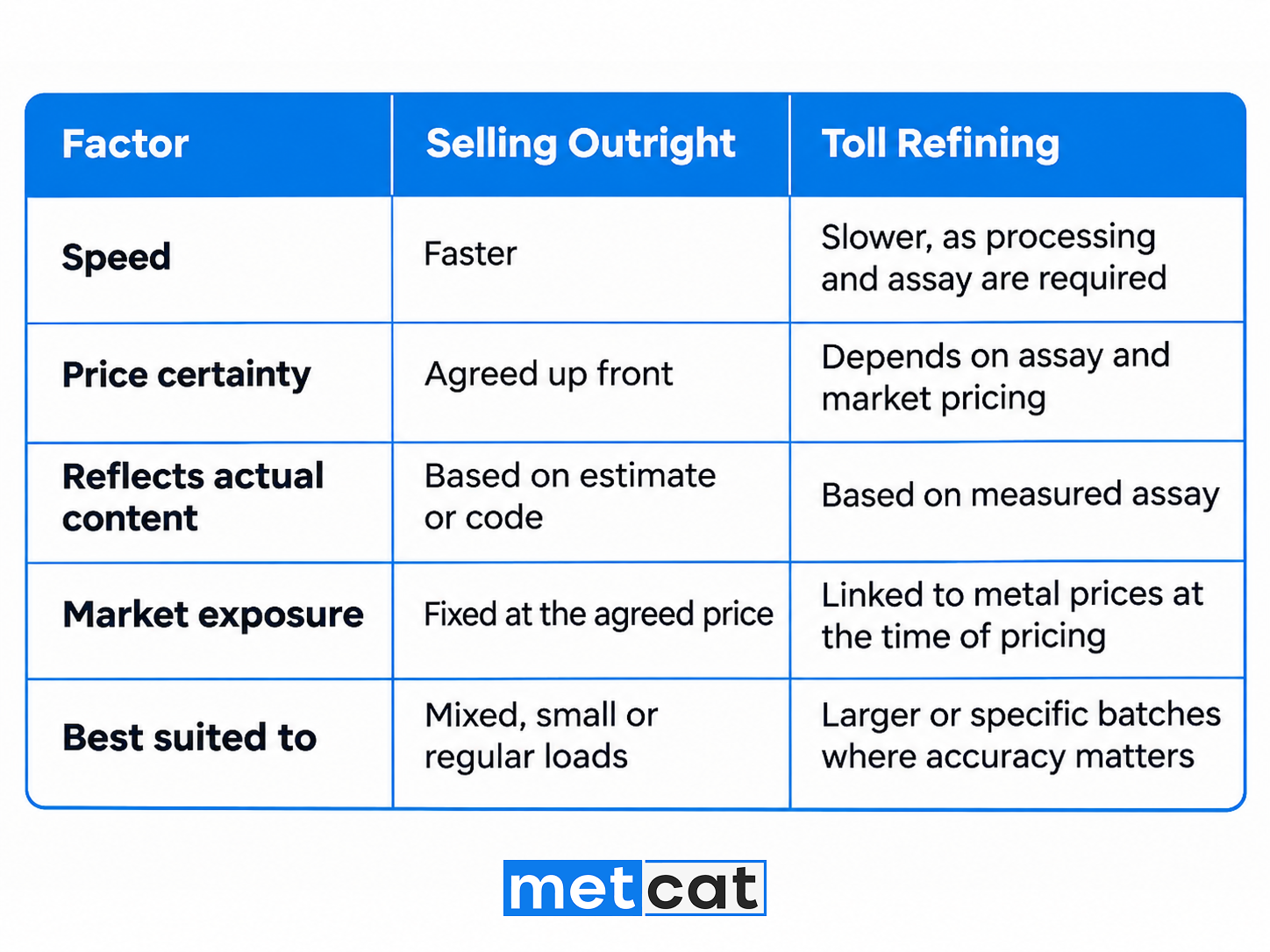
- Outright sales offer speed and certainty. Toll refining can reflect the true content of your material but involves more steps and market exposure.
- The better return depends on your material, volume, timing and appetite for market movement.
What Does Selling Outright Mean?
Selling outright is the straightforward route. A buyer agrees on a price for your converters, often based on type or identifying code, and you're paid on that agreed basis. The price reflects the buyer's assessment of the likely value at the time.
Strengths
- Quick and simple
- Clear, agreed price at the point of sale
- Less waiting for processing and results
Considerations
- The price is based on an estimate of content, not an individual assay of your material
- Your return is fixed at the agreed rate, so you won't share in later market movement
For converters bought by piece, MetCat prices using the identifying code, with real-time pricing available through the MetCat app and updated daily in line with the precious metals market. See how this works in our metal purchasing service.
What Is Toll Refining?
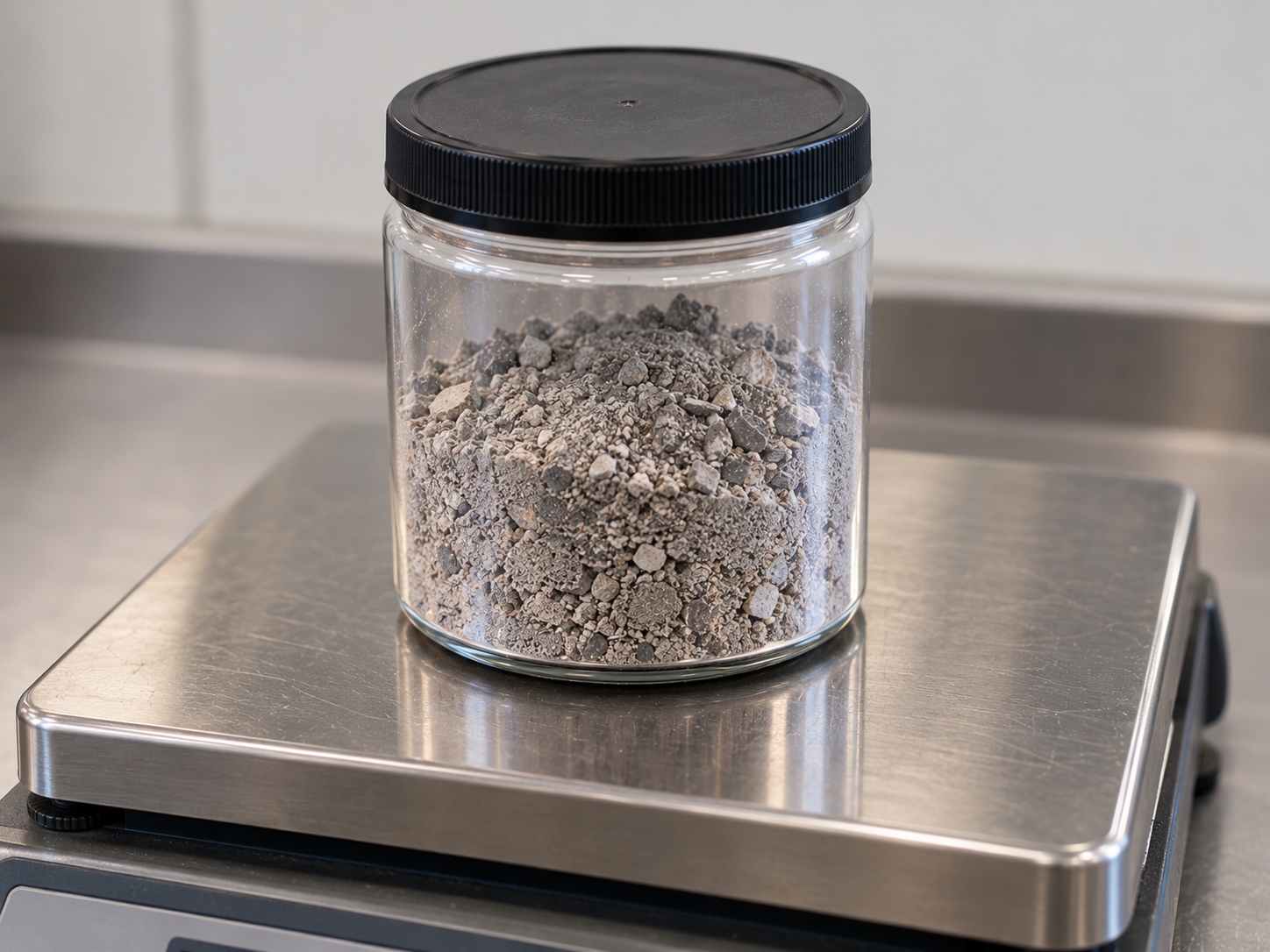
Toll refining is a service route for suppliers who want their material to be processed and valued on what it actually contains. Instead of selling the converters for an agreed price up front, your material goes through the refining process to recover precious metal. The material is sampled and assayed, and the result determines the value returned to you, less the agreed processing charges.
Strengths
- Your return reflects the measured content of your material
- Certificated assay results provide transparency
- Suited to larger or higher-grade batches, where the details really matter
Considerations
- It takes longer than an outright sale, because processing and assay need to be completed
- The final value depends on the assay and on precious metal prices when pricing is fixed
- Charges and terms need to be clearly understood in advance
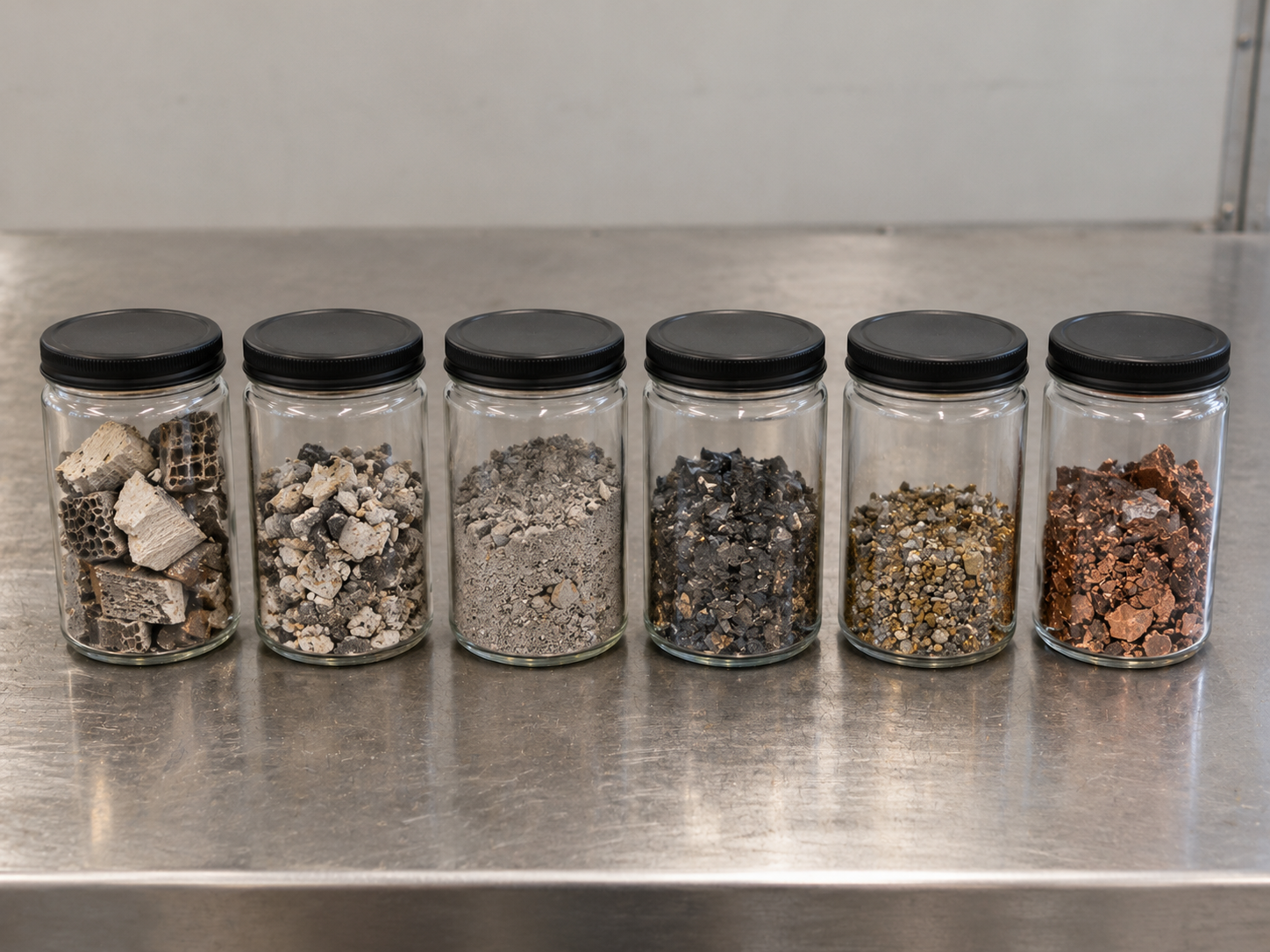
MetCat provides metallic catalyst processing and toll refining, as well as DPF and ceramic processing using in-house equipment, with accurate certificated assay results provided through a leading laboratory.
Toll Refining vs Selling Outright: A Comparison
Which Gets Trade Suppliers the Best Return?
There's no one-size-fits-all answer, and any provider who promises one should be treated with caution. Return depends on your circumstances.
Think about:
- Volume. Larger batches may justify the extra steps of toll refining.
- Material type. Different converters contain different amounts of precious metal. Your identification and sorting matter.
- Payment timing. If you need a quick turnaround, outright may suit you better.
- Risk appetite. Toll refining involves market movement. Outright removes it.
- Long term strategy. Some suppliers use both routes depending on the material.
Because the precious metals market changes, it's worth comparing figures regularly rather than assuming one route always wins.
How MetCat Can Help
MetCat is open to both Trade and Public, and tailors services to scrap merchants, contractors and other businesses. We combine state-of-the-art equipment, relationships with leading autocatalyst refineries and fast payment to support strong commercial terms. We also offer collection services, or you can drop material at our Wolverhampton site.
Want to compare routes for your own material? Contact the MetCat team for a free, quick quote, or download the MetCat app for real-time pricing.
Frequently Asked Questions
What is toll refining for catalytic converters?
Toll refining is a service where your material is processed, assayed and the recovered precious metals are valued, with the result returned to you minus processing charges. It's an alternative to selling for a fixed price up front.
Is toll refining better than selling outright?
Not always. Toll refining can reflect the measured content of your material, while outright sales are faster and more certain. The better route depends on volume, material and your appetite for market movement.
How long does toll refining take?
Timescales vary with the material and process, because sampling, processing and assay all take time. It's slower than an outright sale. Ask your refiner for an estimate for your batch.
How does MetCat price converters?
Scrap converters are bought by piece according to their identifying code. Real-time pricing is available through the MetCat app, updated daily in line with the precious metals market, or by phone.
Can I use both routes?
Yes. Many suppliers sell some material outright and use toll refining for others. Matching the route to the material can help balance speed, certainty and return.
Final Thoughts On Toll Refining Catalytic Converters
Selling outright and toll refining each answer a different need. One gives speed and certainty. The other gives a closer reflection of what your material actually contains. The right choice comes down to your volume, your material and how you manage risk. If you'd like help weighing it up, speak to MetCat.