Catalytic Converter Grading Explained: How Buyers Determine Value
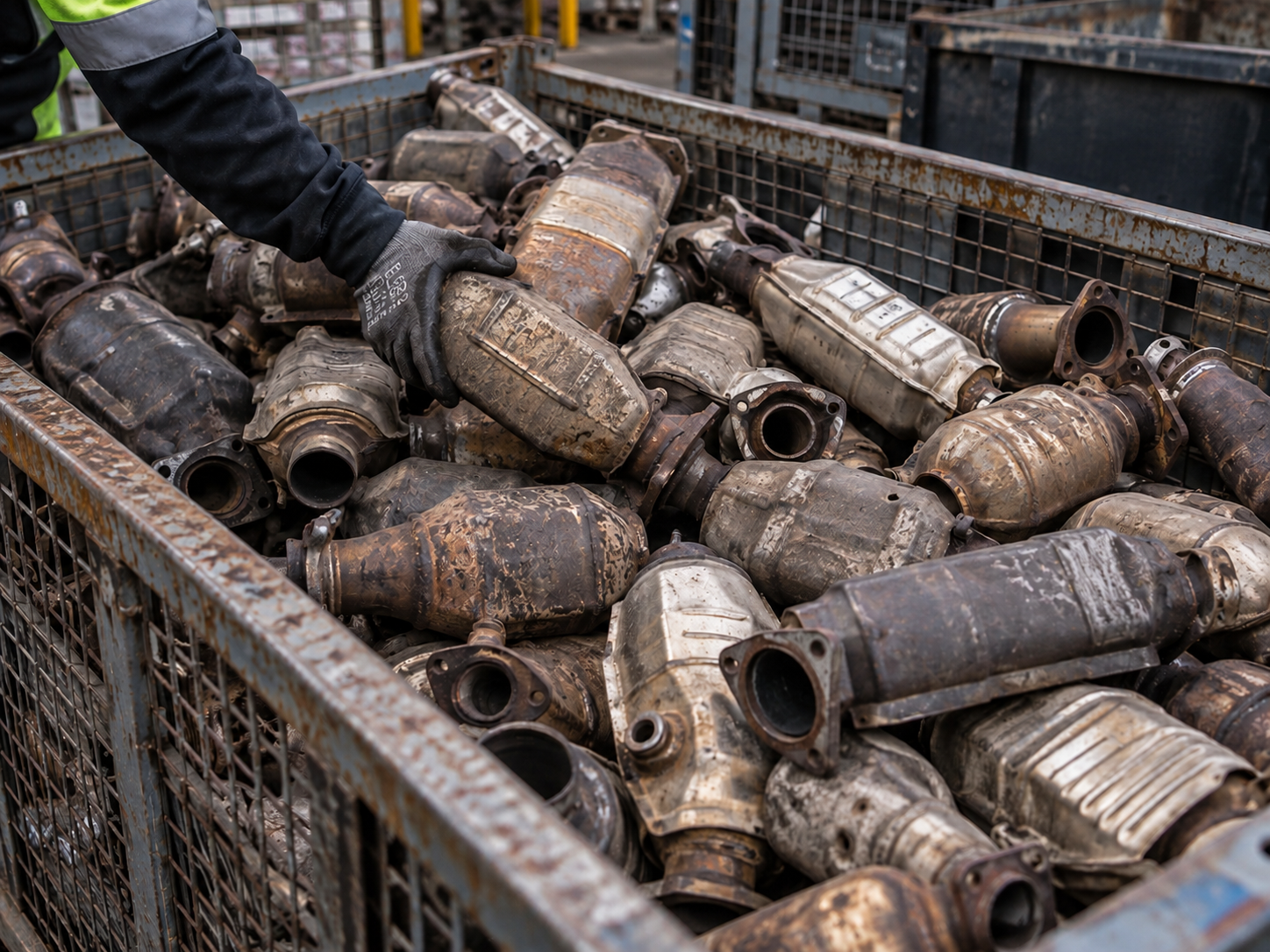
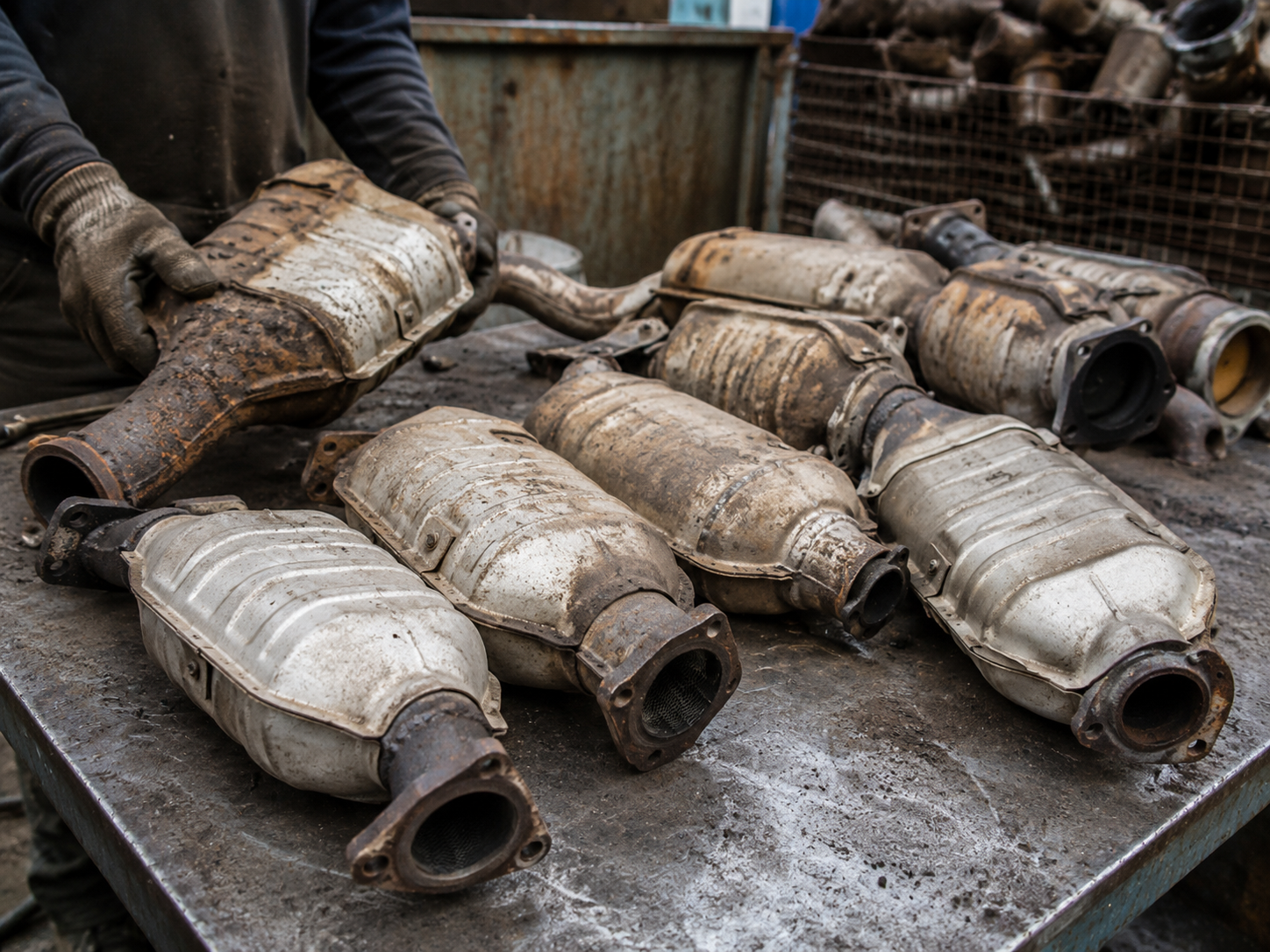
If you have ever received two very different prices for catalytic converters that look fairly similar, there is a reason. Scrap catalytic converters are not created equal. Their value can depend on the exact converter, its precious metal content, condition and the current metals market. That is where grading comes in.
In simple terms, catalytic converter grading means understanding how a buyer identifies and evaluates a converter before attaching a value to it. For some units, that means matching an identifying code to an established piece price. For processed material, valuation can go further, using inspection, sampling and analysis to establish what is actually inside.
Key Takeaways
- There is no single scrap value for every catalytic converter. The specific type, reference and precious metal content influence its value.
- Accurate identification is important. MetCat has more than 5,000 converters catalogued within its pricing system.
- Condition, contamination, damage and substrate type become particularly important when catalyst material is being processed.
- Catalytic converter prices move with platinum, palladium and rhodium markets, so an old price list may no longer reflect current value.
- Piece pricing and assay-based valuation are different methods. One uses an identified converter and current market-linked pricing; the other uses analysis of processed material.
What Does Catalytic Converter Grading Mean?
There is no universal grading system that assigns every catalytic converter a simple A, B or C grade.
Instead, buyers need to determine what converter they are dealing with and what valuation method is appropriate. For intact, identifiable units, the process often starts with a reference code. For loose ceramic material or converters being processed in volume, the process may involve weighing, preparation, representative sampling and laboratory analysis.
Grading can vary between multiple buyers, but the principle stays the same: identify the material accurately before deciding what it is worth.
What Do Buyers Look at When Grading a Catalytic Converter?
A professional evaluation considers more than what it looks like from the outside.
Identifying Codes and References
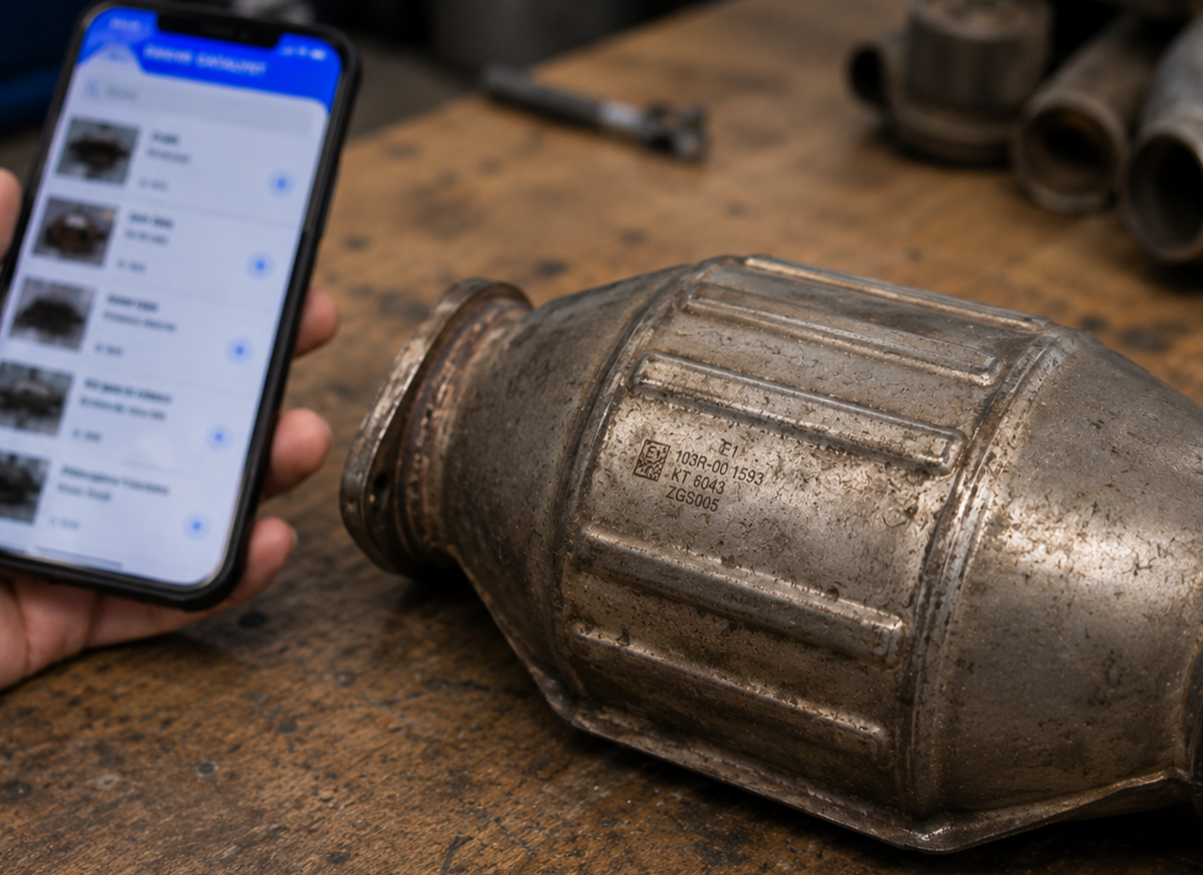
One of the first things a buyer looks for is an identifying code or reference associated with the converter. Sellers sometimes refer to these as serial numbers, although the exact type and placement of the identifier varies between manufacturers.
There may be a number stamped onto the converter housing, for example. That reference can help distinguish one scrap converter from another and allow a catalogued unit to be matched to existing pricing information.
This is particularly useful when selling catalytic converters regularly. Rather than relying on appearance alone, an identifiable unit can be assessed against a known reference.
MetCat currently has 5,000+ catalytic converters catalogued within its pricing system, helping suppliers identify individual units and check current pricing.
Converter Type and Vehicle Application
Converters are manufactured for different vehicles, engine configurations, model years and emission standards. As a result, their construction and expected metal loading can vary.
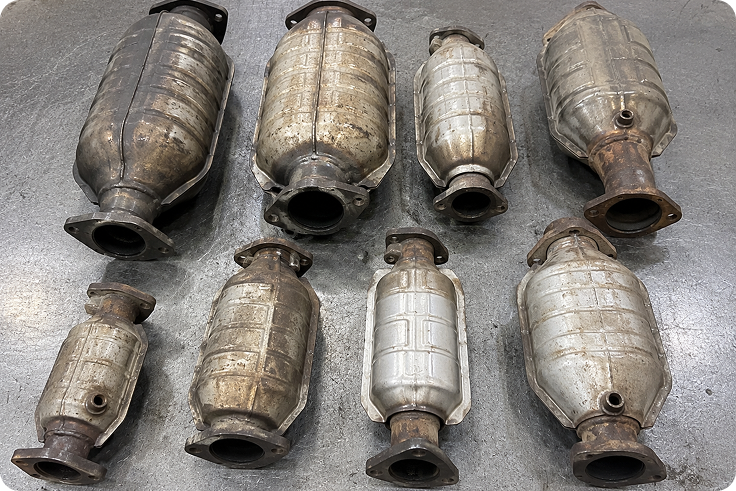
OEM converters, meaning original equipment converters fitted by the vehicle manufacturer, can also differ considerably from one application to another. Two converters of a similar size therefore do not necessarily contain the same amount or combination of valuable material.
That is one reason visual grading alone has limitations.

Why Are Some Catalytic Converters Worth More Than Others?
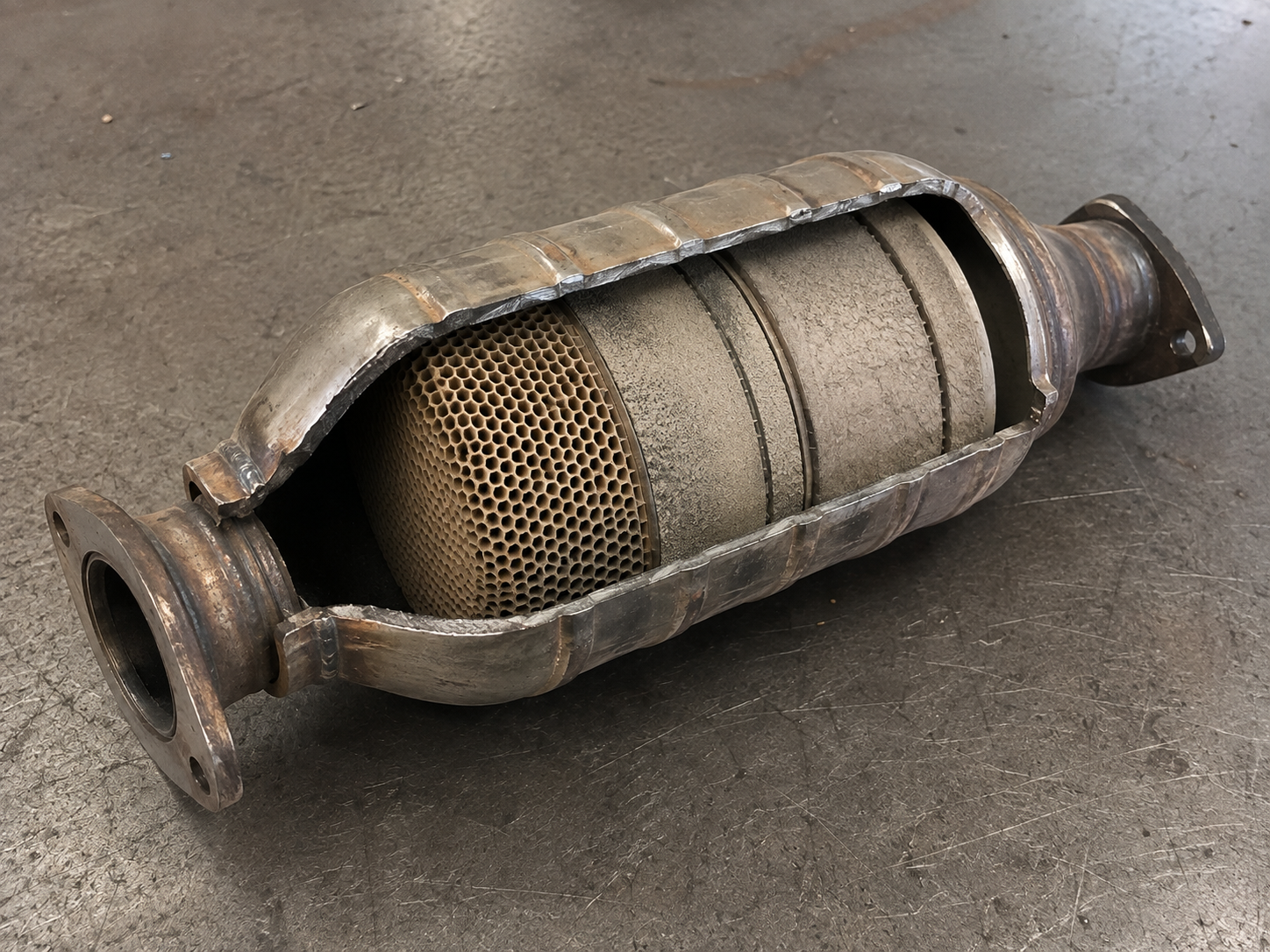
A major part of catalytic converter value comes from the recoverable precious metals contained within the catalyst material.
The key metals associated with catalytic converter recycling are platinum, palladium and rhodium. Different converters can contain different quantities and combinations of these metals.
This is often referred to as precious metal content or metal loading.
A converter designed for one vehicle application may therefore have a very different underlying value from another converter that appears almost identical from the outside. Manufacturing requirements, vehicle application and changing emission standards have all influenced catalyst designs over time.
Then there is the market itself.
The market price of platinum, palladium and rhodium changes. A catalytic converter price that was accurate several months ago may therefore be different today, even if the physical converter has not changed.
That is why current pricing matters.
Does Condition Affect Catalytic Converter Value?
Condition can matter, although its importance depends on how the converter is being bought or processed.
When ceramic or catalyst material is processed, MetCat's procedure includes inspecting the material for:
- contamination
- physical damage
- substrate type
The material can then be prepared and milled into a homogeneous powder so that a representative sample can be analysed.
This distinction is important. A rusty outer casing alone does not tell you how much recoverable precious metal remains inside. However, missing material, contamination or damage to the substrate can become relevant when determining what is actually available for recovery.
For automotive recycling businesses handling larger volumes, proper inspection and analysis can therefore give a much clearer picture than appearance alone.
Piece Pricing vs Assay-Based Valuation
There are two useful ways to think about catalytic converter valuation: piece pricing and assay-based valuation.
Piece Pricing
Piece pricing is typically suited to intact converters that can be identified against a known reference.
Once the converter has been matched, its current price can be checked against market-linked pricing. This creates a relatively quick and straightforward route for yards, garages, dismantlers and individual sellers.
MetCat's catalogue includes more than 5,000 converter references, with pricing linked to current market conditions. Suppliers selling in bulk can check these through the MetCat App rather than relying on an outdated static list.
Assay-Based Valuation
Assay-based valuation is different.
For material going through processing, the catalyst can be prepared and sampled before analysis determines its elemental composition. MetCat's processing procedure can include receiving and recording the material, inspection, crushing, milling, representative sampling and XRF analysis.
The analytical result can then be considered alongside current precious-metal values to establish the value of the processed material.
How Can I Find Out What My Catalytic Converter Is Worth?
Start by identifying the converter as accurately as possible.
Look for a visible reference or identifying number on the housing and avoid assuming that a similar-looking converter has the same value. If you regularly handle converters, keeping identification information organised can also make future pricing considerably quicker.
For larger batches of catalytic converters, the easiest route is to check live pricing on the MetCat App. For smaller amounts, unidentified material or enquiries about processing and assay-based settlement, you can also get in touch with MetCat to discuss the most appropriate route.
FAQs
How are catalytic converters graded?
Catalytic converters are generally evaluated through identification and material assessment rather than one universal grading scale. For an intact unit, a buyer may match its identifying reference with established pricing. Processed catalyst material can instead be inspected, sampled and analysed.
Do catalytic converter serial numbers determine value?
An identifying code can help a buyer establish exactly which converter they are dealing with and match it to relevant pricing information. The code itself does not create the value. It helps identify a converter whose expected material characteristics and current market-linked price are known.
Why do catalytic converter prices change?
Catalytic converters contain valuable platinum-group metals, particularly platinum, palladium and rhodium. Their market values fluctuate, so the underlying value of a converter can move as the precious-metals market changes.
Is assay pricing more accurate than piece pricing?
They serve different purposes. Piece pricing is efficient for identifiable, catalogued converters. Assay-based valuation is useful when catalyst material is being processed and its actual composition is being measured. The right method depends on the type, quantity and condition of material being handled.
Can two similar-looking catalytic converters have different values?
Yes. Similar dimensions or appearance do not mean two converters contain the same catalyst material. Vehicle application, converter specification, precious metal loading and market conditions can all influence value.
Know What You Have Before You Sell
Understanding catalytic converter grading removes much of the mystery from the selling process. Identification tells the buyer what converter they are dealing with, current precious-metal pricing affects what that material is worth, and processing or assay can provide another level of certainty for suitable batches.
For a quick starting point, check the identifying code and look up the current price in the MetCat App. For processing requirements or material that needs a closer assessment, get in touch with MetCat to discuss the next step.