What Metals Are Inside a Catalytic Converter? Platinum, Palladium & Rhodium Explained
If you have ever wondered what metals are in a catalytic converter, the three names worth knowing are platinum, palladium and rhodium. These valuable platinum group metals help convert harmful pollutants into less harmful emissions before they leave a vehicle's exhaust system.
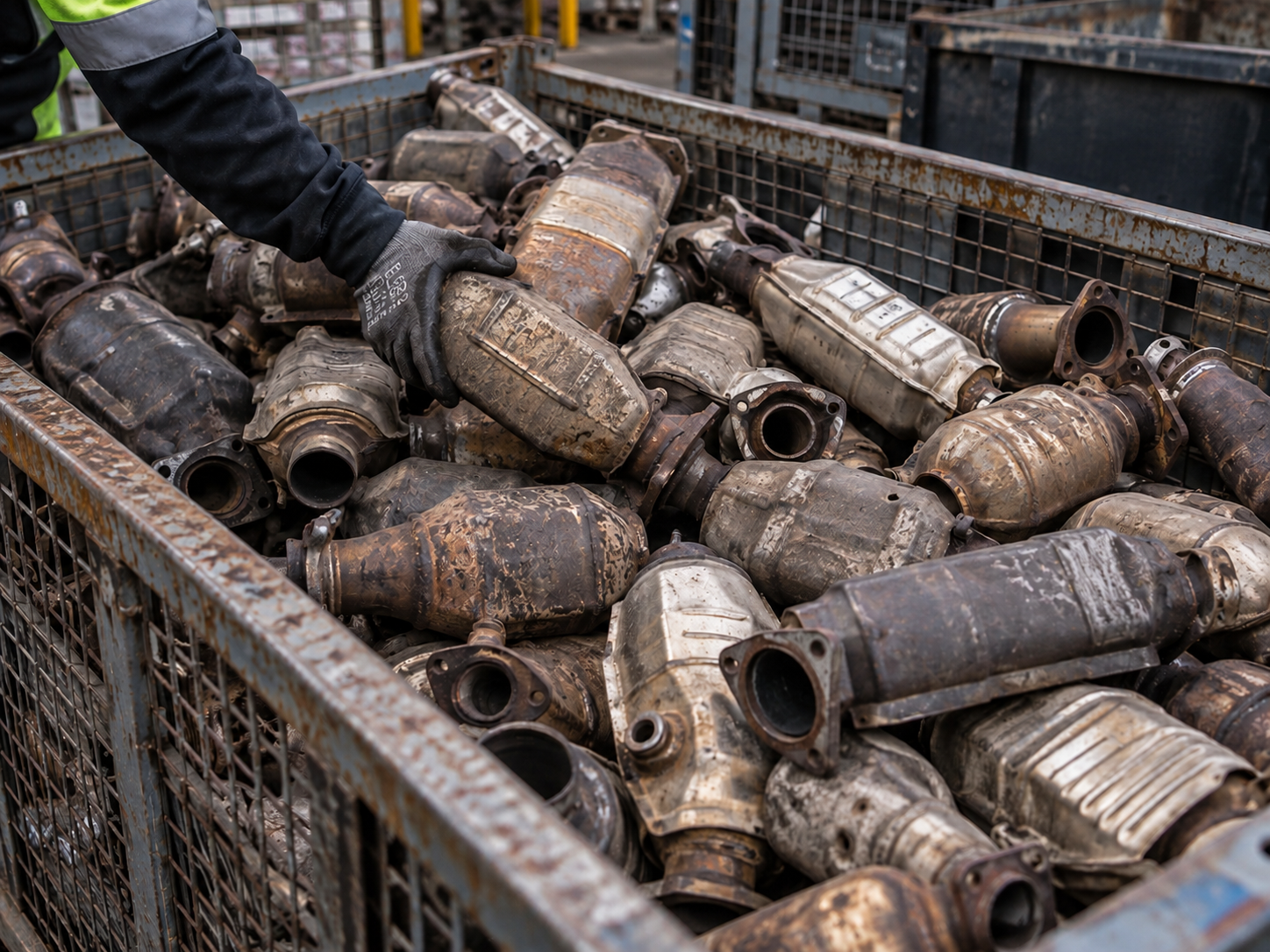
Their presence also explains why an end-of-life catalytic converter can retain scrap value. However, two converters that look almost identical can be worth very different amounts. The converter type, identifying reference, precious-metal content and current market conditions all have an influence on a catalytic converter’s value.
For vehicle owners, garages, scrap merchants and automotive traders, understanding what is actually inside a catalytic converter makes the valuation process much clearer.
Key Takeaways
- Platinum, palladium and rhodium are the principal precious metals associated with catalytic converters.
- These metals help process pollutants including carbon monoxide and nitrogen oxide compounds.
- Different converters contain different combinations and quantities of platinum group metals.
- Physical size alone does not determine catalytic converter scrap value.
- Precious-metal prices fluctuate, so converter values can change over time.
- Correct identification is important when establishing what a converter may be worth.
Why Are Precious Metals Used in Catalytic Converters?
A catalytic converter forms part of a vehicle's exhaust system and helps reduce harmful emissions produced by the engine.
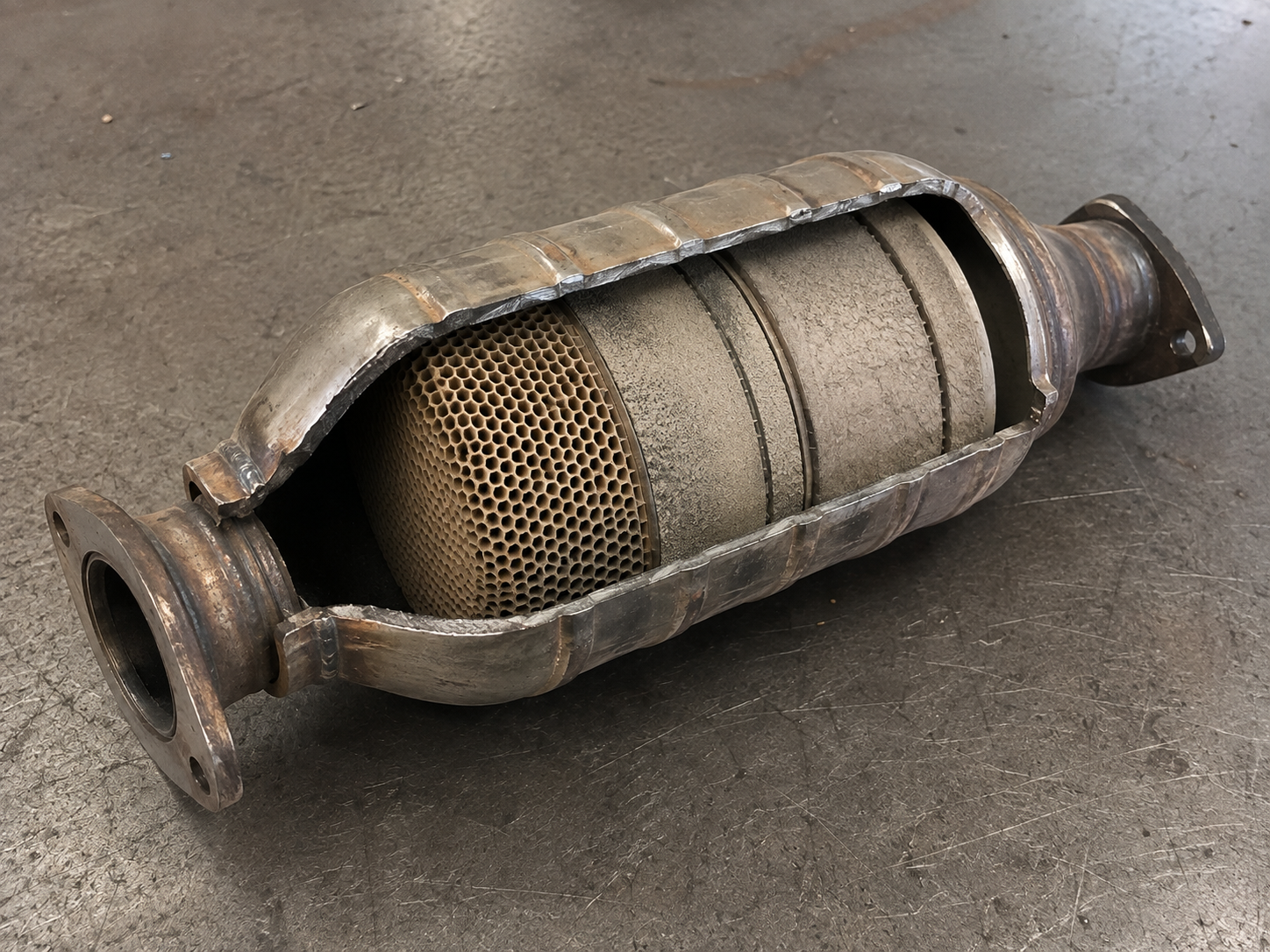
Inside the converter is typically a ceramic or metallic substrate with a honeycomb-style structure. Its large surface area carries a catalytic coating containing materials such as platinum, palladium and rhodium.
These precious metals act as catalysts, encouraging chemical reactions that transform harmful exhaust components into less harmful substances.
Their usefulness does not disappear simply because the vehicle or converter reaches the end of its working life. The platinum group metals may still be recoverable through specialist recycling and processing, giving scrap catalytic converters their potential value.

Platinum in Catalytic Converters
Platinum is the precious metal most commonly associated with catalytic converters.
Its resistance to heat and corrosion makes it suitable for the demanding conditions found inside an exhaust system. It supports reactions that help convert pollutants such as carbon monoxide and unburnt hydrocarbons into less harmful emissions.
However, finding platinum inside a converter does not automatically reveal how much the unit is worth. The quantity of recoverable platinum can vary significantly between converters, while market prices also change. This is why accurate identification of your catalytic converter matters more than simply knowing that there might be platinum inside.
Palladium in Catalytic Converters
Palladium is another valuable member of the platinum group metals and has been widely used in catalytic converter technology, particularly in petrol-engine emissions systems.
Like platinum, it supports chemical reactions that reduce harmful components in exhaust gases.
Palladium is also a globally traded precious metal, so its market value can rise or fall. These movements can influence catalytic converter scrap prices.
Could the same converter therefore have a different scrap value several months later? Yes, definitely! Changes in palladium, platinum and rhodium markets are one reason valuations fluctuate.
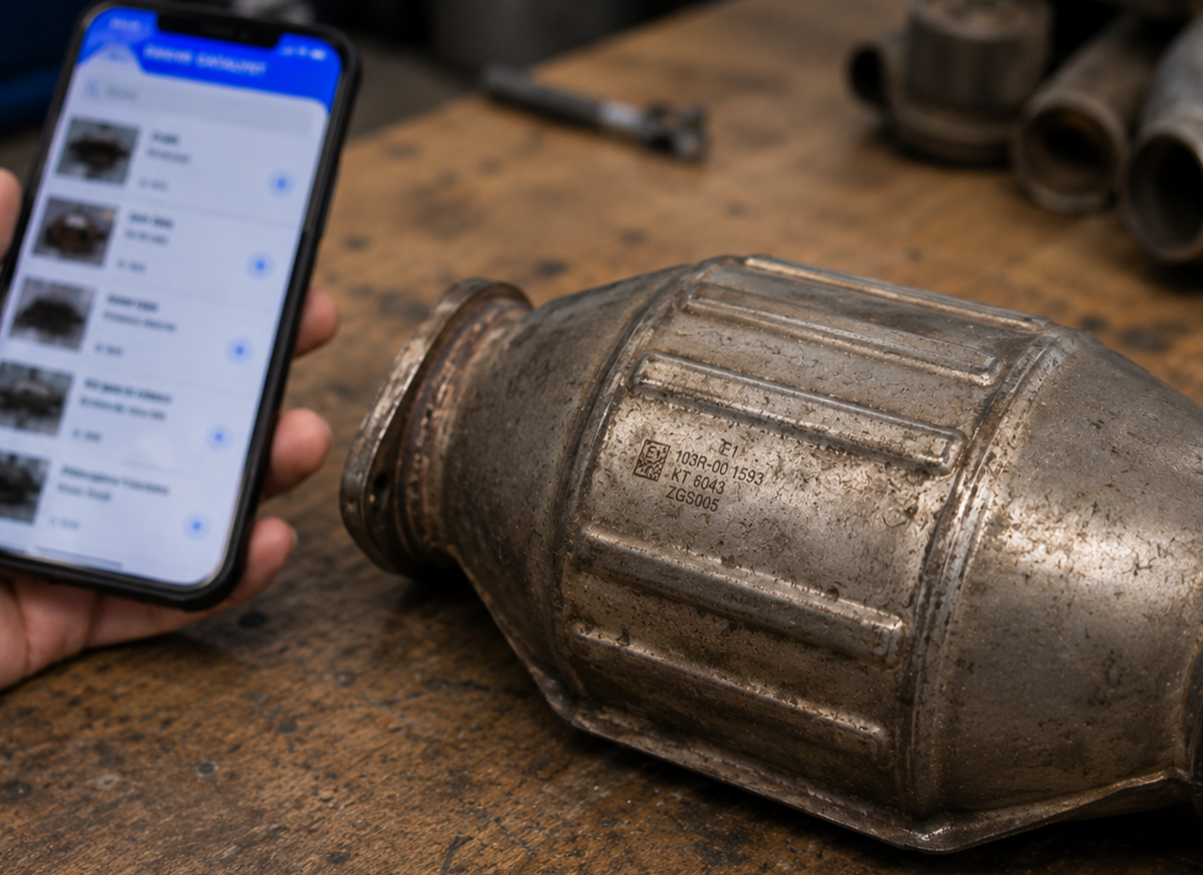
MetCat's real-time pricing reflects this changing market, with catalytic converter prices available through the MetCat App that get updated daily.
Rhodium in Catalytic Converters
Rhodium may be less familiar to the average vehicle owner, but it performs an important role inside catalytic converters.
It is particularly effective at supporting reactions that reduce harmful nitrogen oxide emissions produced during combustion.
Rhodium is also a highly valuable precious metal. As a result, the quantity of recoverable rhodium within a converter can influence its recycling value.
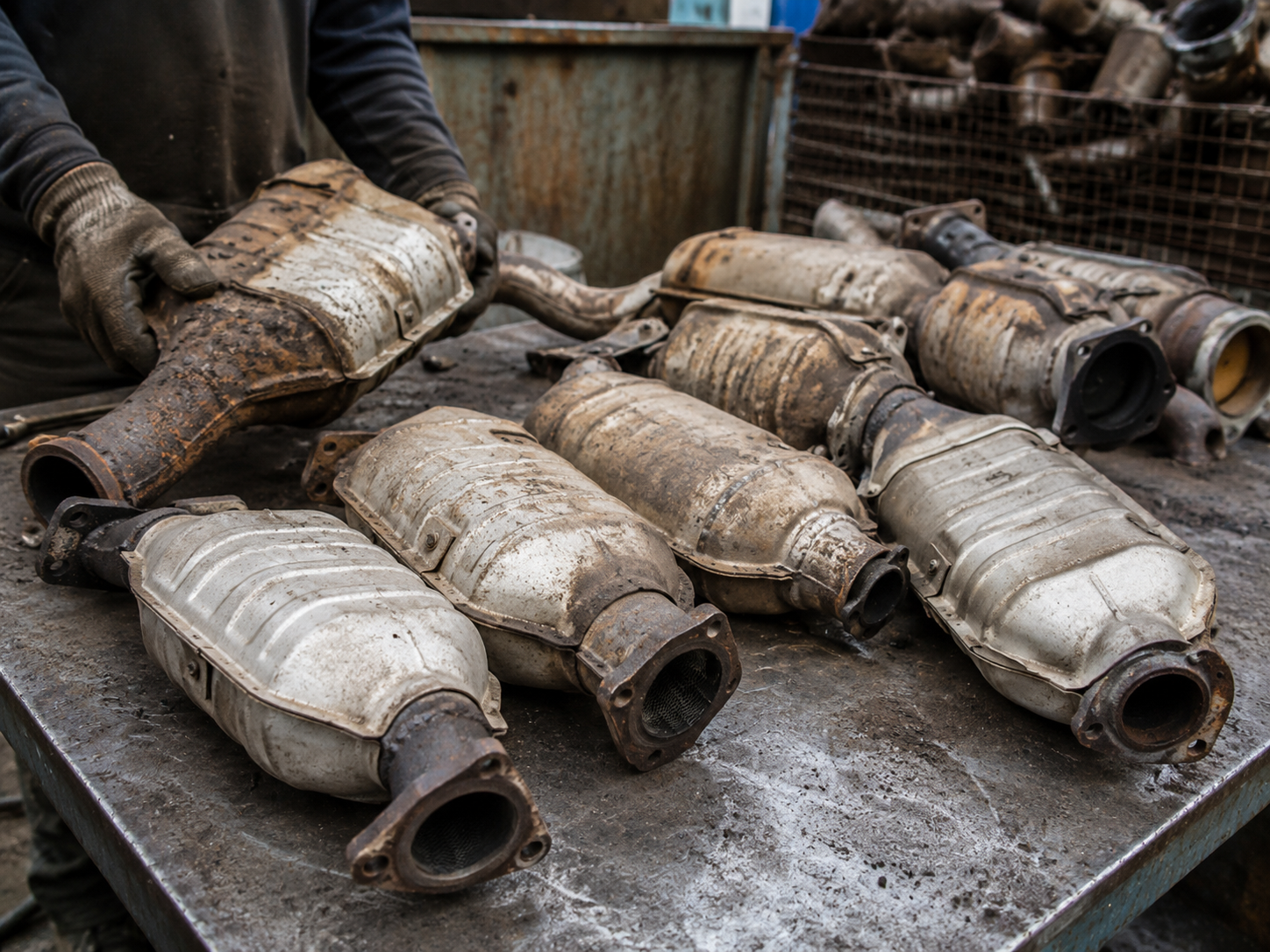
Again, appearances tell you very little. Different converters use different precious-metal formulations, so a unit should be properly identified rather than valued according to its size or shape.
Do All Catalytic Converters Contain the Same Metals?
No. Catalytic converters can contain different quantities and combinations of platinum, palladium and rhodium.
The exact formulation can depend on the vehicle, engine type, emissions requirements, converter design and manufacturer specification.
This also explains something that people often get confused about, which is that a large catalytic converter is not automatically more valuable than a smaller one. Two similar-looking units could contain completely different amounts of recoverable precious metal.
For someone trying to establish what a catalytic converter is worth, the identifying code or reference is far more useful than trying to judge value by looking at the outer casing alone.
Why Do Catalytic Converter Scrap Prices Vary?
Several factors can influence the value of an end-of-life catalytic converter, including:
- The converter's identifying reference or code
- Its type and internal composition
- Recoverable platinum, palladium and rhodium content
- Current precious-metal market prices
- The condition and completeness of the converter
- The processing required to recover its valuable materials
There are thousands of converter references, so generic claims about what a catalytic converter is worth are often misleading.
Current market conditions add another variable. A price from months ago may no longer accurately reflect today's precious-metal market.
If you are considering selling, our guide on selling a catalytic converter explains the process from identifying your converter all the way through to getting a quote and arranging collection or delivery.
How Are Precious Metals Recovered From Catalytic Converters?
Recovering platinum, palladium and rhodium requires specialist processing. These metals are present as microscopic particles dispersed within the catalytic washcoat that is applied to the ceramic honeycomb inside the converter, rather than as separate, visible pieces of metal.
Accurate recovery and valuation therefore rely on specialist equipment, proper sampling methods, and refining processes.
For processed material, certificated assay results can also be used to establish precious-metal content accurately. This becomes particularly important for commercial suppliers handling larger quantities of catalytic converter material, where accurate processing and recovery can have a significant impact.
What Is My Catalytic Converter Worth?
Knowing which metals are inside your catalytic converter is useful, but identifying the specific converter is the next step towards establishing how much it could be worth.
Catalytic converters are typically identified using their reference or identifying code. This is far more useful for valuation than judging a converter by its size or appearance, as the code can be used to identify the specific unit and its associated precious-metal content.
Current market conditions matter too! Platinum, palladium and rhodium prices fluctuate, which means catalytic converter values can change over time. For an up-to-date indication, you can check current catalytic converter prices using the MetCat App, where pricing is updated daily in line with precious-metal markets.
If you cannot identify your converter or need help understanding its current value, you can also get in touch with MetCat.
Frequently Asked Questions
What metals are in a catalytic converter?
The main valuable metals associated with catalytic converters are platinum, palladium and rhodium. These platinum group metals act as catalysts, helping reduce harmful pollutants in vehicle exhaust gases.
Why are specifically platinum, palladium and rhodium used in catalytic converters?
These metals can withstand demanding exhaust conditions while supporting chemical reactions that convert pollutants such as carbon monoxide, hydrocarbons and nitrogen oxides into less harmful emissions.
Does every catalytic converter contain platinum?
Catalytic converter compositions vary. Different units can contain different quantities and combinations of platinum, palladium and rhodium depending on their design and application.
Does a bigger catalytic converter contain more precious metal?
Not necessarily. Physical size does not reliably indicate precious-metal content. The converter's reference and recoverable metal loading are more useful when assessing value.
Turn Your End-of-Life Catalytic Converter Into Value
Platinum, palladium and rhodium are central to both the emissions-control function and recycling value of catalytic converters. But every converter is different.
Precious-metal content, converter references and changing market prices mean visual estimates rarely give the full picture. Accurate identification and specialist experience are key to understanding current value.
At MetCat, we recycle end-of-life catalytic converters for customers across the UK, combining more than 40 years of metal-recycling experience with real-time market-linked pricing, specialist processing and fast, efficient service.
If you’d like to find out what your catalytic converter is currently worth, you can check live prices on the MetCat App or get in touch with our team for a free, quick quote.