MetCat App Walkthrough: How Real-Time Pricing Works
Scrap metal and catalytic converter values can move with the market, so a price checked last week may not be that useful today. The MetCat App is a real-time scrap metal pricing app designed to give suppliers a quicker way to check current values without relying on old lists or repeatedly calling for a quote. It brings catalytic converter and non-ferrous metal pricing into one place, helping sellers make better-informed decisions before arranging a sale.
Key takeaways
- Prices are updated daily in line with relevant market movements.
- Users can check catalytic converter and non-ferrous metal prices in one place.
- The system covers more than 5,000 catalytic converters.
- Converter listings use identifying codes, vehicle information and images.
- The process is simple: check a price, sell or arrange collection, then get paid.
What is the MetCat App?
Available on iOS and Android, the MetCat App helps suppliers identify material, check current scrap metal prices and decide what to do next.
For catalytic converters, that matters because MetCat purchases scrap converters by piece according to their identifying code. Each listing can be matched with a code, car model and image, giving sellers more useful information than a broad national price guide.
How does real-time pricing work?
MetCat describes its pricing as real-time and market-linked, with app prices updated daily according to the precious metals market.
Due to catalytic converters containing platinum group metals, their market values change daily, which can affect converter prices. This is one reason fixed or saved price sheets can become outdated quickly.
Prices published by local scrap yards or general scrap-price websites can provide context, but actual buying prices depend on the material, grade, converter code and buyer. The MetCat App shows MetCat’s own current purchasing prices rather than acting as a general scrap yard comparison tool.
That matters when margins are tight and several units need pricing before a collection or site visit is planned.
How to check a catalytic converter price
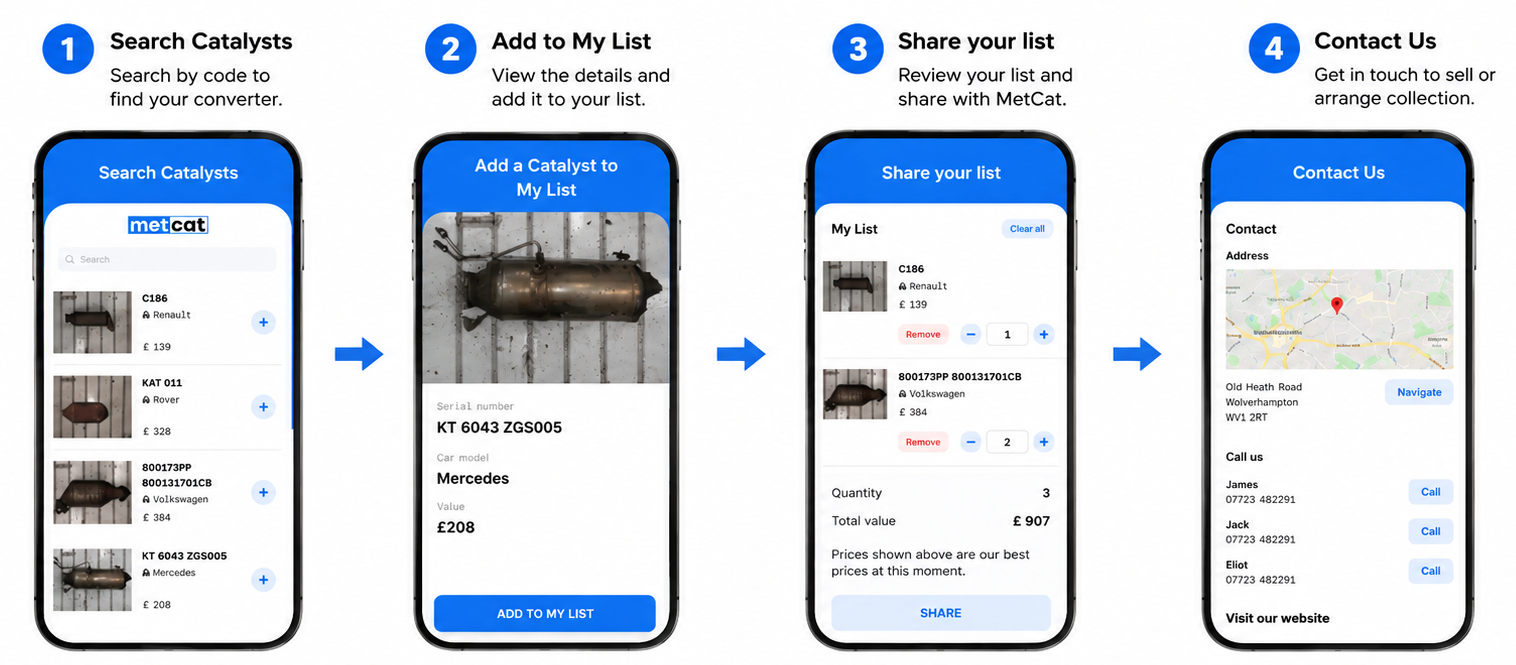
1. Find the identifying code
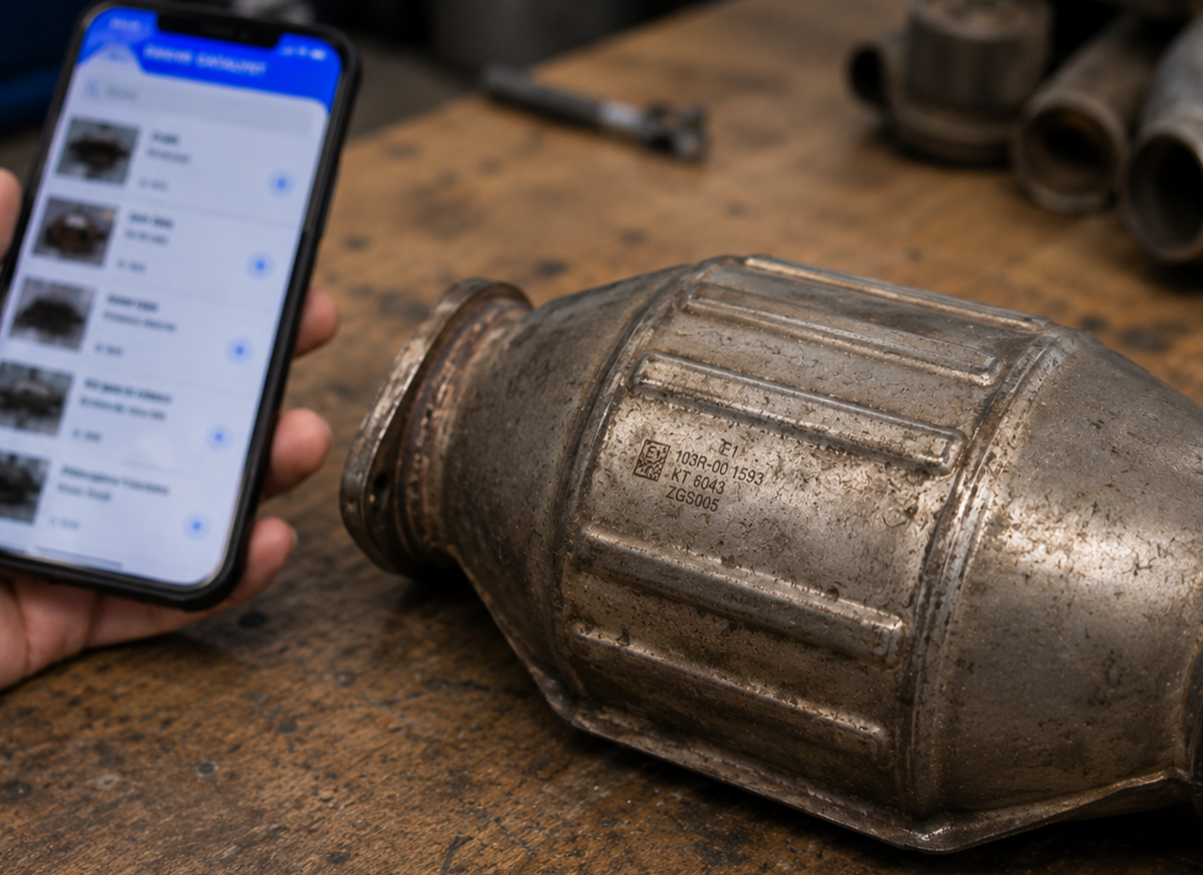
Start with the code stamped or printed on the catalytic converter. Because MetCat buys converters by piece according to code, this is the most useful identifier when checking a value.
2. Search for the converter
Use the identifying information to find the relevant unit. The database contains more than 5,000 catalytic converters, with listings supported by vehicle information and images.
3. Check the current price
Once the converter is identified, you can view its current listed price. Because prices are refreshed daily, the figure reflects more recent market conditions than an old printed or saved list.
4. Build your list and contact MetCat
Users can create a list of catalytic converters in the app and send it to MetCat. From there, the next step may be dropping material at the Wolverhampton site or arranging collection where appropriate.
Below are real screenshots of the MetCat App, where the user adds a catalyst to their list to share.
Can you check non-ferrous metal prices too?
Yes, the MetCat App also supports pricing for non-ferrous metals, which makes it useful for suppliers handling more than catalytic converters alone.
A garage, breaker or merchant may have converters alongside copper, aluminium, brass, lead or cable, so checking current pricing in one place can simplify day-to-day selling decisions.
Why daily pricing matters
Daily pricing matters because scrap values can change as the underlying metals markets move. For catalytic converters in particular, changes in platinum, palladium and rhodium prices can affect what a converter is worth, making an older price less useful when it comes time to sell.
Scrap prices are not universal across the UK. National prices and broader national scrap averages can provide useful market context, but local scrap yards set their own buying prices based on factors such as material grade, quantity and current market conditions.
For suppliers checking prices regularly, that combination of current information on the MetCat App and transparency makes it easier to decide when they are ready to sell.
Frequently asked questions
How often are prices updated?
MetCat states that app prices are updated daily in line with the precious metals market.
Does the MetCat app price every catalytic converter?
The system includes more than 5,000 catalytic converters. If you cannot identify a unit, contact MetCat for help.
Can I sell through the app?
The app helps you start the selling process, but the full sale is not completed within the app. You can check current prices, create a list of your catalytic converters and share it with MetCat. From there, you can contact the team to arrange the next steps, including dropping off your material or arranging collection.
Are scrap metal prices the same at every UK scrap yard?
No. There is no single national scrap price every yard must pay. General averages can provide context, but actual prices vary by buyer, material, grade, quantity and market conditions.
Make current pricing part of the routine
For suppliers checking catalytic converter or non-ferrous metal prices regularly, the MetCat App removes a common frustration: trying to work from yesterday’s information.
Download the MetCat App today to check current prices, or get in touch with MetCat if you need help identifying material, arranging collection, or discussing a larger load.